The legacy of the Batthyány family
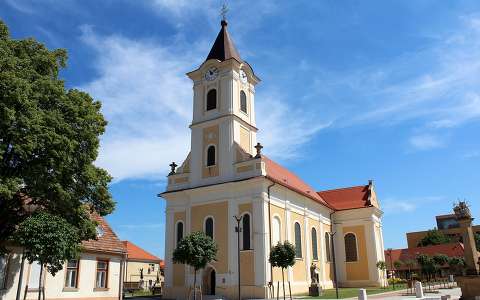
Standing in the centre of Zalaszentgrót, Saint Emeric Parish Church was built between 1753 and 1758 with the support of the Batthyány family. Imre Batthyány commissioned the church, and some building materials from the former Franciscan church were reused during its construction. The best-known surviving remnant of that earlier church is the medieval structure now known as the Romtorony, or Ruined Tower.
The church is dedicated to Saint Emeric, the son of King Saint Stephen I of Hungary and Queen Gisela, who died at a young age.
Baroque exterior, richly decorated Rococo interior
The interior of this free-standing Baroque church is particularly impressive. Its high altar, side altars and pulpit are Rococo works dating from the second half of the 18th century.
The church is also home to the “Victorious Immaculata”, an oil painting dating from the mid-18th century, together with a number of other works of artistic and ecclesiastical importance.
The Madonna of Szentgrót
The church’s most remarkable artistic treasure is the Madonna of Szentgrót, a Gothic wooden sculpture dating from the 1490s.
This late-medieval depiction of the Virgin Mary is one of the nationally recognised artistic treasures of the church in Zalaszentgrót and a noteworthy example of the historic Madonna sculptures that have survived in Hungary.
For this alone, it is worth stepping inside the church.
Centuries of history under one roof
Another special treasure of the church is the relic of Saint Innocent the Martyr, preserved in a glass coffin.
The church also contains the red marble tombstone of Miklós Kanizsai, a high-ranking official of the medieval Kingdom of Hungary, dating from the early 15th century. The interior therefore brings together traces of several different periods – from the Middle Ages through the Baroque and Rococo eras to the present day.
The Feast of Saint Emeric
The feast day of Saint Emeric, the patron saint of the church, is celebrated on 5 November, and the church’s traditional annual feast is also associated with this date.
A walk through the historic centre of Zalaszentgrót
A visit to Saint Emeric Church is easy to combine with a walk through the historic centre of Zalaszentgrót. From the church, continue towards the town’s other historic landmarks and discover several different chapters of Zalaszentgrót’s past within just a few hours.
Bon Villa tip: If you enjoy history and art, don’t admire the church only from the outside. If it is open to visitors, step inside and look for the Madonna of Szentgrót – one of the town’s most valuable artistic treasures, created more than 500 years ago.