A village that never actually existed
One of the most fascinating things about the Göcsej Open-Air Museum is that the village you see today as one complete settlement never actually existed in this form.
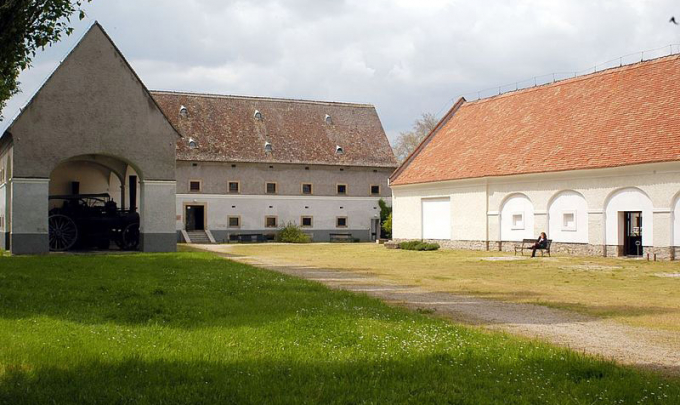
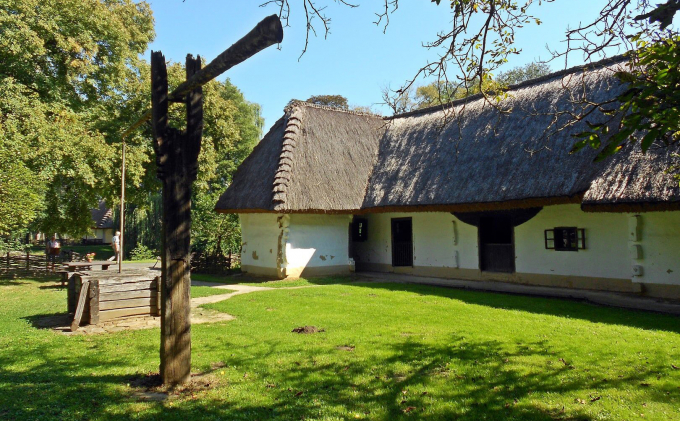
The open-air museum was designed to make you feel as though you were walking through a 19th-century village in the Göcsej region. Houses, farm buildings, barns, wine cellars, a blacksmith’s workshop, a bell tower and a wooden church were relocated to Zalaegerszeg from different villages across Zala.
The interiors are furnished with period furniture, everyday objects and traditional tools, allowing you to discover not only how people once built their homes in Zala, but also how local families lived, cooked, worked and farmed.
Every house tells a different story
As you explore the museum, it is worth doing more than simply admiring the old buildings from outside. Step inside the houses and take a closer look around the traditional farmyards too.
Among the buildings are the blacksmith’s workshop from Hottó, houses from Kálócfá and Kávás, the distinctive bent house and longhouse from Zalalövő, the traditional barn from Nagykutas, and the characteristic skirted bell tower from Budafa.
Another particularly striking sight is the thatched wooden church from Zalacséb.
Together, these buildings reveal just how closely home life, animal husbandry, farming and everyday work were once connected.
The watermill that has always stood here
Most of the buildings in the open-air museum were brought here from other villages. One, however, has always stood on this very spot.
This is the Hencz Watermill, around which the entire museum village was later created.
The historic mill and the old branch of the Zala River give the museum its distinctive atmosphere. They are part of the reason why the site feels much more like a real old village than a conventional museum.
Don’t miss the smoke house
One of the museum’s most interesting buildings is the 18th-century smoke house from Felsőszenterzsébet.
Houses like this did not yet have chimneys in the modern sense. Smoke from the open hearth circulated through the interior before escaping through specially designed openings.
From a modern perspective, it is difficult to imagine what everyday life must have been like in such conditions. That is precisely why this house offers such a vivid glimpse into the realities of traditional peasant life in Göcsej.
Village life was far from easy
Walking among the romantic-looking thatched cottages, it is easy to become enchanted by this vanished rural world. The museum also shows, however, that life in 19th-century Göcsej was far from idyllic.
Farming, keeping animals, preserving and preparing food, cutting wood, weaving, spinning and many other forms of physical labour were all part of everyday family life.
Almost everything had its own place and purpose, and whatever could be reused was used again.
This is what makes the museum particularly interesting: it does not simply preserve old houses, but an entire way of life that has now almost completely disappeared.
Zöldösvény – where nature becomes part of the museum
Another special feature of the Göcsej Open-Air Museum is the Zöldösvény Nature Trail.
As you follow the trail, you can explore the relationship between traditional country life and the natural environment. Kitchen gardens, composting, old food-preservation methods, traditional games and places for observing fish and birds make the experience particularly engaging for children.
The museum is therefore more than a historical attraction. It is also a pleasant green space where you can simply enjoy a leisurely walk.
A great choice with children
We also recommend the Göcsej Open-Air Museum for families.
Its outdoor setting means children do not have to spend hours walking between museum display cases. Instead, they can move from one house to another, explore farm buildings, discover the tools and objects of traditional village life and enjoy the natural surroundings at the same time.
Museum events regularly feature traditional crafts, heritage activities, food-related events and demonstrations.
If you are visiting with children, it is particularly worthwhile checking what is on that day.
More than just a museum
The Göcsej Open-Air Museum remains a living cultural venue today.
Throughout the year, guided tours, craft activities, seasonal celebrations and traditional events bring the old farmsteads back to life. On these occasions, the museum feels completely different: ovens are lit, traditional crafts return and something of the life once lived here reappears between the old houses.
It is therefore well worth checking the current events programme before your visit.
How much time should you allow?
For a relaxed visit, allow at least one and a half to two hours.
If you visit during a special event, come with children or simply enjoy exploring historic buildings in more detail, you could easily spend half a day here.
Bon Villa tip: If you are planning a day trip to Zalaegerszeg, visit the Göcsej Open-Air Museum in the first half of the day, when you can take your time exploring the old farmsteads. If possible, choose a day when a craft or heritage event is taking place – this is when the museum truly comes to life. Afterwards, continue your day in the centre of Zalaegerszeg.
Thatched cottages, traditional crafts, an old watermill and a vanished world of rural Zala – at the Göcsej Open-Air Museum, you do not simply look at the past; for a little while, you can walk right into it.