A bridge more than 170 years old
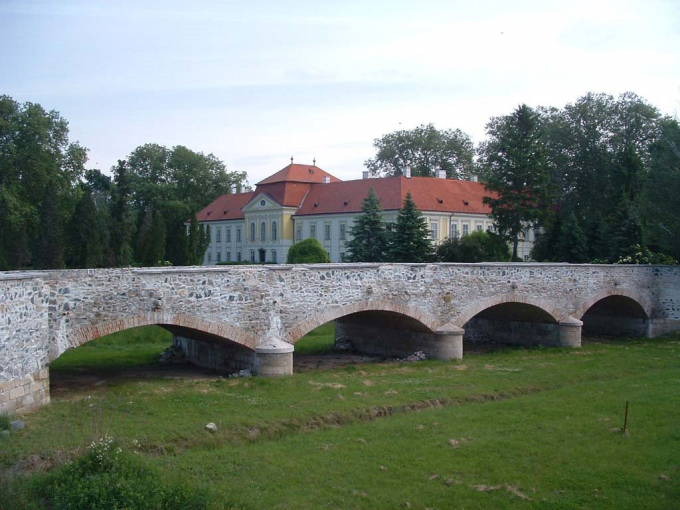
Hatamov Bridge was built in 1854 and has since become one of the best-known historic landmarks of Zalaszentgrót.
With its four brick-vaulted arches, the bridge is reminiscent of the famous Nine-Arched Bridge of Hortobágy. It measures approximately 43 metres in length and 6.5 metres in width and served as an important part of local transport for more than a century.
By the 1970s, however, its future had become uncertain.
A bridge that was almost demolished
In 1975, road traffic was diverted to a newly built asphalt bridge. The old stone bridge lost its original role in the local road network, and demolition was considered.
Local residents who cared deeply about the heritage of Zalaszentgrót were determined not to lose the historic structure. In their efforts to save it, they revived a story dating back to the spring of 1945.
Who was Hatamov?
Towards the end of the Second World War, fighting also took place around Zalaszentgrót between German and Soviet forces. The bridge, which had been mined by retreating German troops, became a strategically important location.
During the fighting, a Soviet soldier named Haddam Hatamov lost his life at the bridge. His name would later become closely associated with the structure.
When the demolition of the bridge was discussed decades later, local heritage enthusiasts tracked down surviving eyewitnesses to the wartime events and brought Hatamov’s story back into public attention.
Their efforts succeeded: the bridge was saved from demolition.
How the Stone Bridge became Hatamov Bridge
After the bridge was preserved, a commemorative ceremony was held, with members of the former soldier’s family invited to attend. From then on, the structure became increasingly known as Hatamov Bridge.
Following Hungary’s political transition, its traditional local names also came back into wider use. Today, you may therefore see it referred to by any of its three names: Hatamov Bridge, Öreg-híd (“Old Bridge”) or Kő-híd (“Stone Bridge”).
Preserved for future generations
By the 1990s, the condition of the bridge had deteriorated considerably, once again putting its future at risk.
The turning point came with the restoration work that began in 2000. The project prevented further deterioration, and by 2001 one of Zalaszentgrót’s most important historic landmarks had been restored.
Today, the bridge is no longer important because of its role in road transport. More than a century and a half old, it stands as a reminder of the town’s history, the landscape along the Zala River and the determination of local people to preserve their heritage.
Worth visiting on a walk through town
The old brick arches and the surrounding Zala Valley landscape give the bridge a particularly atmospheric setting. If you enjoy historic structures or unusual stories from local history, it is well worth including in your walk around Zalaszentgrót.
Bon Villa tip: Don’t visit Hatamov Bridge as an isolated attraction. Combine it with Batthyány Castle and its park, Saint Emeric Parish Church and some of Zalaszentgrót’s other historic landmarks. In a single leisurely walk, you can discover several centuries of the town’s history.
A bridge that survived the war, escaped demolition decades later, and today stands as one of the symbols of Zalaszentgrót.