The wild side of Lake Balaton
Kis-Balaton – the Little Balaton is one of Europe’s valuable wetland habitats and a distinctive part of the Balaton Uplands National Park.
Its vast reed beds, marshes, shallow waters and islands provide feeding, resting and nesting grounds for an extraordinary variety of birds.
Herons, great egrets, cormorants, ducks, grebes and birds of prey can all appear here – which is why bringing a pair of binoculars can completely transform your experience.
This is not necessarily a place where the aim is to cover as many kilometres as possible.
Stop. Look. Listen to the reeds.
That is what Kis-Balaton is all about.
Kányavári Island – the perfect place to start
If this is your first visit to Kis-Balaton, Kányavári Island is one of the best places to begin.
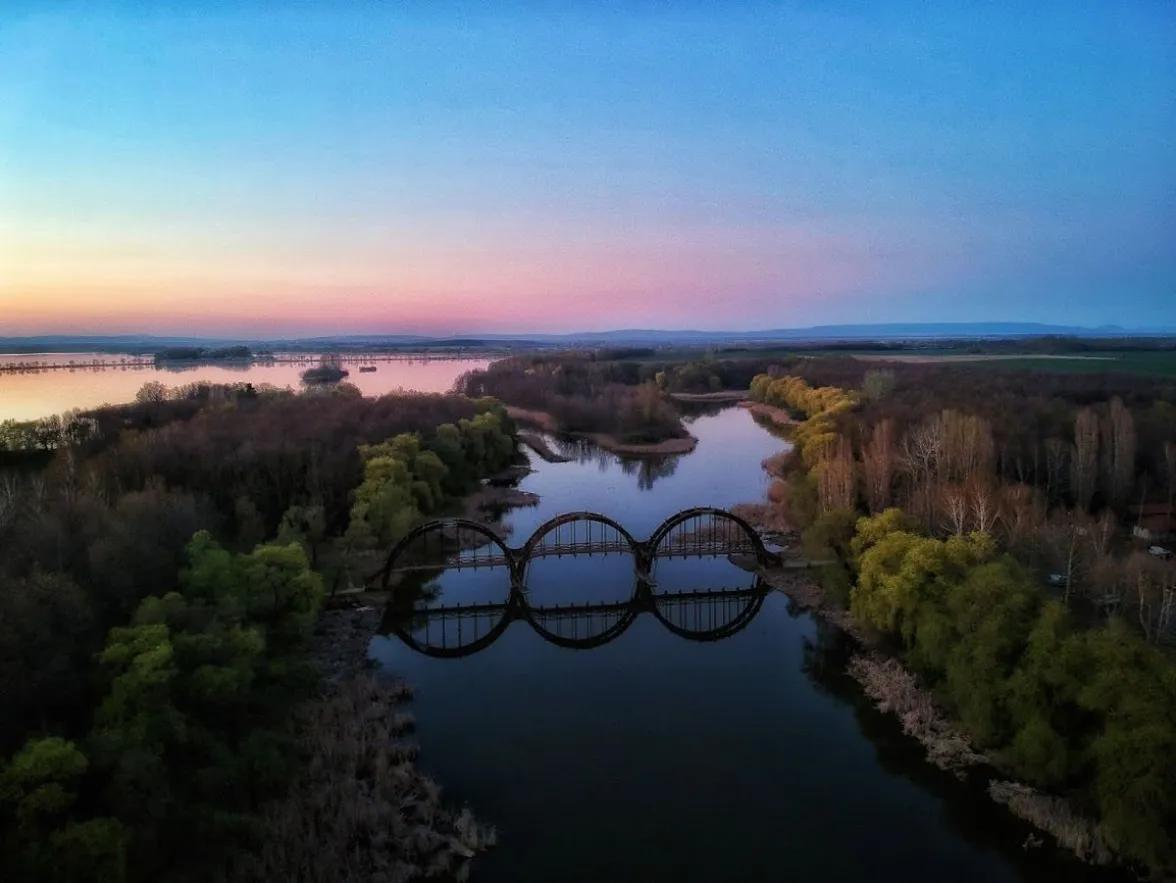
Even the distinctive wooden bridge leading onto the island has become one of the best-known sights of Kis-Balaton.
The nearly 2-kilometre Great Crested Grebe Nature Trail runs around the island and can comfortably be explored in around 1 to 1.5 hours.
Its 15 stops focus primarily on the birdlife of Kis-Balaton.
But there is no reason to hurry.
Climb up to the viewpoints, stop beside the water and watch the reed beds. And if you own a pair of binoculars, definitely bring them with you.
Kányavári Island is freely accessible throughout the year, so it is far more than just a summer attraction.
Among the water buffalo at Kápolnapuszta
Your next stop could be the Kápolnapuszta Buffalo Reserve.
This is home to Hungary’s largest herd of water buffalo accessible to visitors.
You can watch these enormous black animals grazing, resting or wallowing in the mud. A designated walking route leads through the reserve, with viewpoints offering good opportunities to observe the herd.
If you are lucky, you may also spot some of the European ground squirrels that live in the area.
It is an especially good choice with children, with a playground and opportunities to see animals up close adding to the experience.
The reserve is open throughout the year, making it worth visiting in autumn and winter too.
István Fekete and the world of Tüskevár
For many Hungarians, Kis-Balaton is inseparable from István Fekete’s novels Tüskevár and Téli berek.
Here, it is much easier to understand the atmosphere behind the adventures of Tutajos, Bütyök and Uncle Matula.
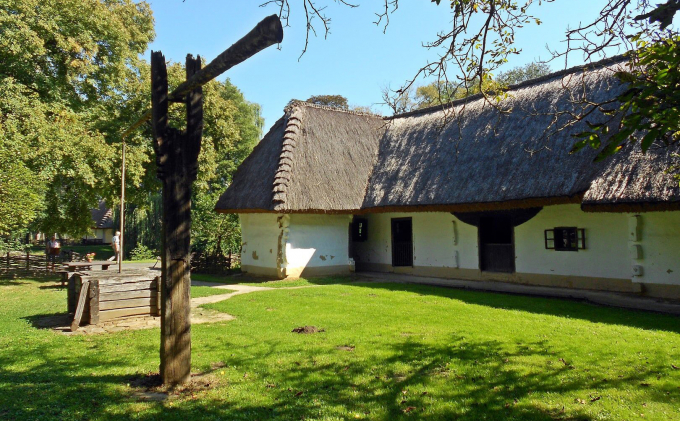
The strictly protected Diás Island is home to the István Fekete memorial site and Matula’s hut.
This area, however, is not an ordinary attraction that you can simply explore on your own.
Its exceptional character has survived precisely because nature conservation comes first.
Matula’s hut – accessible only with a guide
Diás Island lies within a strictly protected part of Kis-Balaton and can therefore only be visited with an expert guide.
A guided tour introduces you to much more than the world of István Fekete.
Your guide can point out things you might never notice on your own: birds, plants, animal tracks and the subtle signs that reveal how this wetland ecosystem works.
By the end of the tour, you may find yourself looking at the reed beds in a completely different way.
And you can even get there by canoe
One of the most memorable ways to experience Kis-Balaton is on a guided canoe tour towards Diás Island.
From the water, the landscape looks completely different.
Paddling through reed beds and across quiet water allows you to discover parts of Kis-Balaton that remain hidden from the road or on a conventional sightseeing trip.
This is no ordinary nature trail or sightseeing tour.
It feels like a small expedition into the world of the wetlands.
Canoe tours are guided programmes, so advance registration and booking are required.
Kis-Balaton Visitor Centre – understand what you are seeing
If you would like to understand how this remarkable landscape developed and how it works, visit the Kis-Balaton Visitor Centre near Fenékpuszta.
Interactive exhibitions introduce the wildlife, water system, conservation and history of Kis-Balaton.
It can be an especially good starting point with children. Once they have discovered some of the animals and plants indoors, recognising them later in the wild becomes much more exciting.
Expert-guided programmes to Diás Island also depart from here.
Zalavár – a thousand years of history beside Kis-Balaton
If you would like to add some history to your day in nature, stop at Vársziget in Zalavár.
The Kis-Balaton area is remarkable not only for its natural environment but also for its historical significance.
The Zalavár Historical Memorial Park and its surroundings preserve traces of centuries of history, making them an excellent addition to a nature-focused day.
It is a chance to discover several very different sides of the region in a single trip.
Birdwatching – bring binoculars!
It is worth preparing for Kis-Balaton a little differently from a conventional sightseeing trip.
If you have binoculars at home, put them in the car.
A distant white speck may suddenly become a great egret, while the bird circling above the reeds could turn out to be a bird of prey.
Birdlife changes with the seasons, so the same location can offer completely different experiences in spring, summer and autumn.
Most magical at dawn and in the late afternoon
If you enjoy nature photography or simply appreciate peace and quiet, try to avoid the busiest part of the day.
In the early morning and late-afternoon light, the reeds, open water and birdlife reveal an entirely different character.
Autumn brings mist, spring fills the wetlands with birdsong, and summer surrounds you with a sea of green reeds.
That is why Kis-Balaton is not somewhere you visit just once.
Every season is different.
One of the best family days out too
Kis-Balaton works particularly well for families because you do not have to spend the whole day moving from one museum to another.
A wooden bridge and viewpoints on Kányavári Island.
Water buffalo and animals at Kápolnapuszta.
Interactive exhibits at the visitor centre.
Matula’s hut and the world of Tüskevár.
And with older children, perhaps even a canoe trip.
Nature education becomes an adventure almost without anyone noticing.
Half a day or a full day?
Kányavári Island on its own makes an enjoyable 1–2 hour excursion.
But once you are heading to Kis-Balaton, it is worth allowing at least half a day – and preferably a full day.
One comfortable day could look like this:
Kis-Balaton Visitor Centre → Kányavári Island → Kápolnapuszta Buffalo Reserve → Zalavár.
If you book a guided Diás Island visit or canoe tour in advance, however, plan your day around that experience rather than trying to squeeze every other attraction into the same itinerary.
Bon Villa tip: If this is your first visit to Kis-Balaton, start with Kányavári Island and continue to the buffalo reserve. But if you want something truly memorable, book an expert-guided visit to Diás Island in advance – or, even better, discover the wetlands by canoe. Definitely bring binoculars and leave yourself enough time simply to sit somewhere quietly and watch nature.
At Kis-Balaton, what matters is not how many attractions you ticked off your list – but whether you spotted the heron among the reeds, heard the birds and found a few minutes simply to sit in silence.